
With China already flying J-20 and J-35 stealth fighters and Pakistani pilots reportedly training in China ahead of their air force inducting Chinese fifth-generation jets, IAF chief Air Chief Marshal A P Singh on Saturday said the force may have to look at "other fighter platforms" if the indigenous flagship AMCA (advanced medium combat aircraft) project slips.
Calling the arrival of fifth-generation fighters in India's neighbourhood a "cause for worry", ACM Singh said, "We have to fill in the gap. If the other side is getting the 5th generation across, we need to look at some 5th generation."
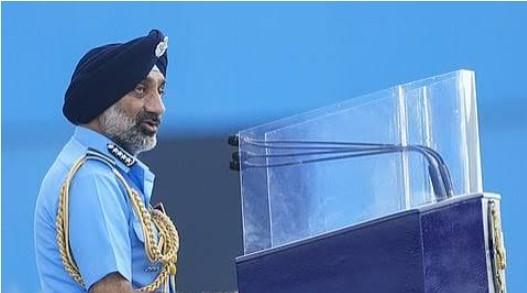
Speaking at his annual press conference in the national capital ahead of Air Force Day, he added, "We may have to look at other fighter platforms in case of delays in AMCA fifth-gen, other programmes."
The IAF chief, however, made it clear that no decision had yet been taken on importing a stealth fighter as a stop-gap. "Russia has offered the Su-57, but no decision has been taken yet," he said. US President Donald Trump, for his part, had dangled the F-35 during PM Narendra Modi's visit to Washington in February last year.
The twin-engine AMCA, being designed by DRDO's Aeronautical Development Agency, is India's only shot at a home-grown stealth fighter. The project is now at the industry-selection stage, with Indian companies vying to develop the jet under a new public-private partnership model. Even if all timelines hold, the jet is unlikely to be inducted before 2035.
The worry is compounded by the IAF's dwindling combat fleet. The force is down to just 29 fighter squadrons, its lowest in decades, against the 42.5 sanctioned to tackle a collusive threat from China and Pakistan. Many experts, in fact, argue that even the sanctioned strength falls short and that the IAF needs at least 60 squadrons to take on the two adversaries together.
To arrest the slide, ACM Singh said the IAF must induct "36 to 40 aircraft every year", underlining that air power remains central to a nation's overall military muscle.
The long delays in HAL's Tejas Mk1A programme have hit the target hard. The hold-up stems largely from the sluggish supply of GE-F404 engines from the US and hurdles in integrating the sub-systems with the radar. The IAF has ordered 180 Mk1A jets in two batches of 83 and 97. Acknowledging that the Mk1A delay had been significant, ACM Singh said the IAF was also counting on the bigger Tejas Mk2 to help plug the gaps.
The immediate numbers crunch is being addressed separately through the MRFA (multi-role fighter aircraft) project. The government cleared the purchase of 114 Rafales from France under a government-to-government deal in February this year. That came almost two decades after the original MMRCA (medium multi-role combat aircraft) contest kicked off in 2007.
If all goes to plan, the MRFA contract could be inked by the end of this financial year, ACM Singh said, adding that price negotiations and other critical aspects were now being thrashed out.
The Rafales, in effect, will cater to the IAF's immediate and medium-term requirements, while the AMCA remains the long-term bet for indigenous stealth capability.
On the long-pending theaterisation, ACM Singh said the IAF was "not against" theatre commands. "But we have a new situation after Operation Sindoor and we should look at all aspects before taking the final decision," he said.
The IAF has long been wary of theatre commands, largely because its depleted fighter strength leaves it with limited assets to divide among different theatres. In August, ACM Singh had also cautioned against a "pre-baked" model picked up from another country, calling for a graded, step-wise approach to avoid disrupting operations. Former CDS Gen Anil Chauhan had submitted a collective proposal on theatre commands to the defence ministry before demitting office in May.
Stressing that self-reliance is critical for combat readiness, ACM Singh said India must develop and produce its own fighter engine. The lack of a home-grown engine has long been the Achilles' heel of the country's military aviation sector. He also said the IAF must transform itself into an "AI-augmented force".
On drones, ACM Singh said the IAF was steadily building up its inventory of drones and loitering munitions, but saw no need for a separate drone force. Such systems, he said, must operate as part of an integrated force alongside other weapons.