
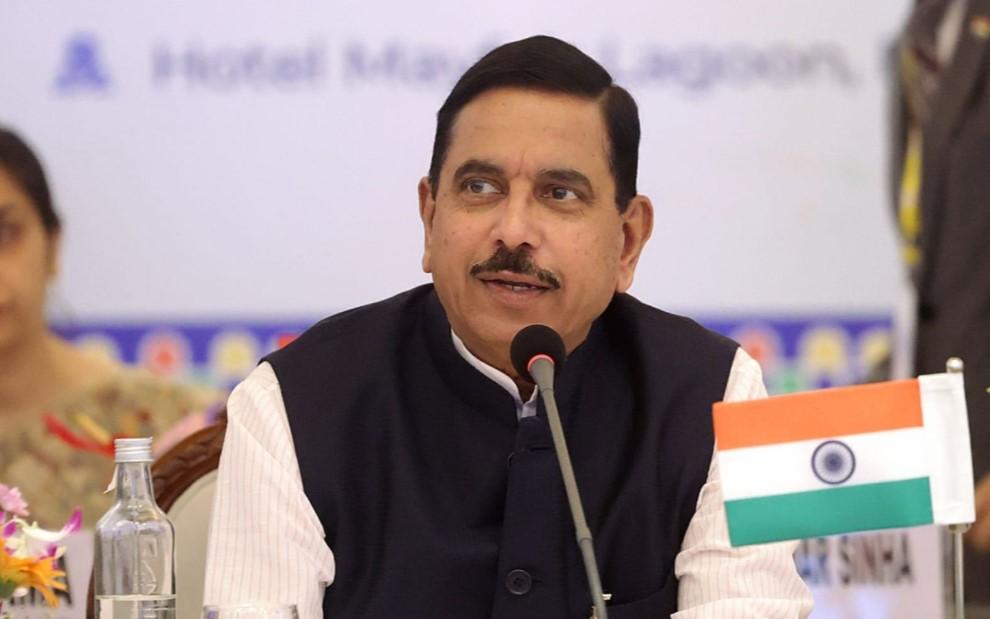
Union Education Minister Pralhad Joshi stated on August 7 that education systems need to prioritise resilience, innovation, cooperation and sustainability to prepare young people for a rapidly changing world.
Speaking at the 13th BRICS Education Ministers’ meeting, Joshi highlighted India’s BRICS chairmanship theme for the year: “Building Resilience and Innovation for Cooperation and Sustainability,” which he described as especially relevant to education.
Joshi said, “Last month, under the leadership of Prime Minister Narendra Modi, I was entrusted with the responsibility of leading India’s education sector. I consider this a responsibility of immense significance, especially given the scale and diversity of India’s education ecosystem. I consider this, therefore, a special privilege that one of my early opportunities to engage with my international counterparts is here among the colleagues from the BRICS family. The 13th BRICS Education Ministers Meeting also assumes particular significance as India holds the BRICS chairmanship this year. I take this opportunity to express India’s appreciation for the support and constructive engagement of all member countries in advancing our shared priorities.”
He emphasised the necessity for education systems to handle disruptions caused by pandemics, economic uncertainties, climate challenges and rapid technological changes, while evolving to meet the aspirations of each new generation.
Joshi further stressed the importance of maintaining a human-centred approach to education. He said, “Technology will change, economies will transform, new professions will emerge, and old ones evolve. But at the centre of every education system must remain the human being: the child seeking an opportunity to learn, the teacher shaping the young minds, the researcher pursuing new knowledge, and the young person aspiring for a better future. That, I believe, should also be the guiding principles of our deliberations today.”
On the chairmanship theme, Joshi explained, “Resilience, because our education system must be capable of withstanding the disruptions, whether caused by pandemics, economic uncertainties, climate-related challenges, or the rapid pace of technological change. Innovation, because education systems cannot remain static when the world around them is changing so rapidly. They must continually evolve to meet the aspirations of each new generation and prepare our young people for opportunities that may not even exist today. And cooperation and sustainability, because none of us can address these challenges in isolation. The knowledge we create, the technologies we develop, and the institutions we strengthen must serve not only the present generation but the generations to come.”
On August 6, the Ministry of Education convened the 3rd BRICS Education Senior Officials’ Meeting in Bhubaneswar, where senior officials and delegates from BRICS member countries gathered. The meeting conducted detailed discussions on the proposed BRICS Education Ministers’ Declaration, including BRICS Guiding Principles on Traditional and Indigenous Knowledge Systems, cooperation in Early Childhood Care and Education, TVET and skills development, collaborative research and innovation, mutual recognition of qualifications, and academic leadership, according to the Ministry of Education.